How Print-On-Demand Clothing Sparks a Revolution in Sustainable Apparel Printing and Waste Reduction

By JR, Catch Phrase Poet
The rise of print-on-demand (POD) clothing is transforming the fashion industry into a more sustainable model that minimizes waste and environmental impact. This article will delve into how POD works, its benefits, and why it is revolutionizing the way we think about apparel production. Many consumers today are looking for ways to express their individuality while still making environmentally conscious choices. POD offers a solution to this challenge by enabling personalized designs without the surplus inventory associated with traditional manufacturing. We will explore the environmental impact, economic advantages, and evolving consumer trends that underline the importance of POD in the current fashion landscape.
Environmental Impact
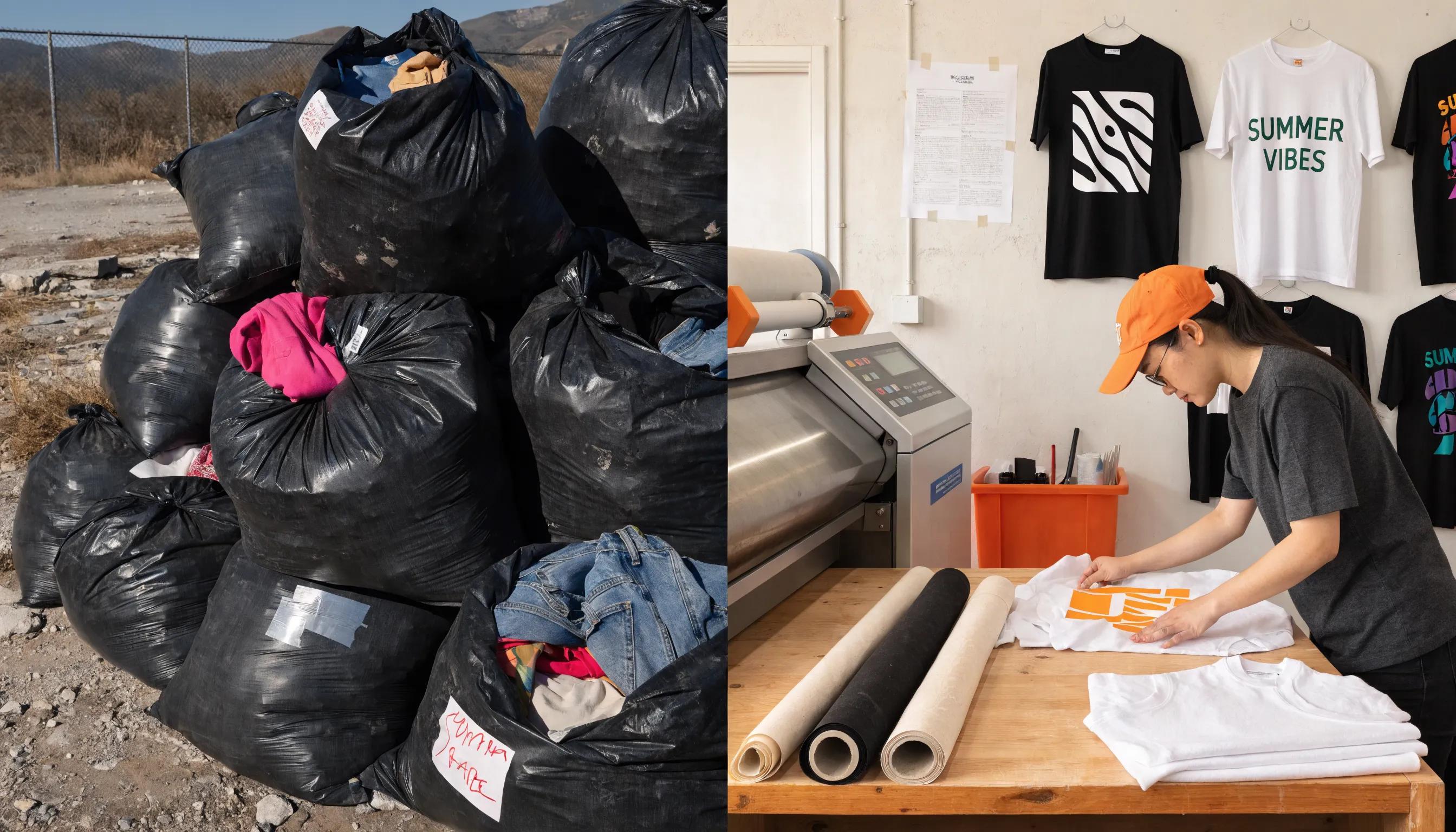
Print-on-demand technology significantly reduces waste associated with traditional garment manufacturing. In conventional production, overproduction often leads to large quantities of unsold clothing, which eventually ends up in landfills. By producing items only as they are ordered, POD eliminates this unnecessary waste. This mechanism not only conserves resources but is also aligned with eco-friendly fashion practices aimed at reducing the carbon footprint of the apparel industry. The emphasis on sustainable practices in apparel manufacturing is crucial in an era marked by increasing environmental awareness among consumers.
This approach is further supported by studies highlighting digital textile printing as a scalable and sustainable alternative that tackles issues of overproduction and consumer behavior, making sustainable choices more accessible.
Digital Textile Printing: Sustainable Fashion & Reduced Overproduction This chapter examines how digital textile printing (DTP) has the potential to offer scalable and sustainable alternatives to conventional fashion and textile production by addressing two key challenges: inefficient overproduction, and consumer behavior. As mass-produced, low-cost textiles dominate the market, consumers struggle to make sustainable choices. DTP enables on-demand production, facilitating localised supply chains and supporting innovative business models that engage consumers and reduce the risks of mass production. Digital Textile Printing: Opportunities and Challenges for Sustainable Localised Production, B Gooby, 2026
Economic Benefits
Print-on-demand services provide significant economic advantages for both manufacturers and consumers. The initial financial barriers for brands are lower, as they do not need to invest heavily in bulk production ahead of time. This model encourages ethical practices and allows emerging designers to enter the market without the risk of financial losses tied to unsold inventory. Consumers benefit from a broader range of choices and often lower prices due to the absence of excess stock costs.
| Advantage |
Attribute |
Value |
| Lower Financial Barriers |
For brands |
Reduced upfront investment |
| Encouragement of Ethical Practices |
Market entry |
Supports small businesses |
This economic model creates a win-win situation where sustainable fashion becomes accessible and profitable.
Consumer Trends
Recent consumer trends illustrate a rising demand for sustainable and personalized apparel. Shoppers increasingly prefer clothing that not only allows for self-expression but also aligns with their environmental values. Customization via print-on-demand technology caters to this desire for individuality without the guilt of contributing to waste. This shift signifies a broader change in consumer behavior, reflecting a growing awareness of sustainability's importance in fashion.
For instance, consumers now seek out brands that emphasize sustainability in their processes. Personalization options, facilitated by POD, allow individuals to make unique fashion statements that reflect their personality and values.
Motivational and Expressive Apparel Designs
Expressive apparel designs often amplify the sustainability message by aligning personal empowerment with eco-friendly choices. Designs that promote positive messages or personal aspirations resonate with consumers who wish to make a statement through their clothing. By choosing motivational clothing, individuals support a fashion culture that values sustainability and social responsibility. This transformation in the apparel market helps consumers feel empowered in their choices while championing a sustainable future.
The artistic designs available through print-on-demand can further enhance this connection, offering both unique styles and a commitment to eco-friendly practices. This allows consumers to wear their values proudly.
Print-on-Demand for Personalized Fashion Collections
Print-on-demand technology enables complete personalization of collections, ensuring that fashion can be waste-free while still catering to individual tastes. By focusing on made-to-order production, POD allows for a unique blend of creativity and sustainability. Customers can select custom designs that speak to their personal narratives without the risk of mass production waste. This flexibility positions POD as a leading solution in sustainable fashion that meets both consumer demands and environmental needs. Explore various collections to find designs that resonate with your personal style and ethical considerations.
What Makes POD a Sustainable Apparel Printing Method?
Print-on-demand stands out as a sustainable printing method due to its minimal waste approach. The demand-driven production model means items are manufactured only when there is a confirmed purchase. This practice greatly reduces fabric waste and optimizes resource utilization. Additionally, many POD services leverage eco-friendly materials, such as organic cotton and recycled polyester, that further contribute to sustainability in fashion.
Which Materials and Methods Power Truly Sustainable Print-On-Demand Apparel?
The choice of materials and printing methods plays a vital role in the sustainability of print-on-demand apparel. Using sustainable fabrics such as organic cotton or recycled fibers not only decreases environmental footprint but also caters to consumer demand for ethical products. Employing cutting-edge digital printing techniques further enhances sustainability by minimizing ink waste and energy consumption, which traditional screen printing methods often overlook.
Indeed, a comparative analysis confirms that digital printing significantly outperforms traditional methods in environmental sustainability by consuming fewer resources and producing less waste.
Digital vs. Traditional Printing: Environmental Impact in Textiles This case study examines the environmental impact of digital printing compared to traditional textile printing methods. The analysis focuses on four key areas: energy consumption, water usage, chemical usage and waste, and overall carbon footprint. Findings indicate that digital printing is a more sustainable alternative, consuming significantly less energy and water while generating minimal chemical waste. Traditional textile printing, characterized by high energy demands, extensive water usage, and toxic chemical outputs, presents considerable environmental challenges. Environmental Impact of Digital Printing Versus Traditional Textile Printing, A Athalye, 2026
How Do POD Production Processes Support Environmental Benefits?
POD production processes inherently support environmental benefits. By only creating products based on actual customer demand, on-demand garment production curtails unnecessary resource consumption. The capacity to print directly leads to lower carbon footprints associated with transportation and excess production. Additionally, integrating green practices into supply chains allows for greater accountability and transparency in sourcing and manufacturing materials.
What Real-World Benefits Do Consumers and the Planet Experience from Print-On-Demand Clothing?
The seamless integration of print-on-demand technology has garnered tangible benefits for both consumers and the planet. Consumers enjoy unique, personalized sustainable clothing options that speak to their individuality and ethical beliefs. For the environment, the reduced textile waste and lower overall emissions — a direct result of POD fashion waste reduction — present a significant stride towards sustainable fashion. As customers increasingly adopt POD clothing, the combined impact includes diminished landfill contributions and support for sustainable practices throughout the industry.
What Case Studies Showcase Textile Waste Reduction Using POD?
Several brands have effectively utilized print-on-demand approaches to demonstrate significant textile waste reduction. For instance, a leading apparel manufacturer transitioned to a POD model, reporting a reduction in waste by over 90% due to the elimination of excess inventory. This success story highlights the potential for POD to reshape conventional practices within the fashion industry, serving as an inspiring example for others to follow.
By embracing the print-on-demand model, both consumers and brands can participate actively in fostering a sustainable fashion future. Catch Phrase Poet leads the way in providing unique and motivational clothing, emphasizing individuality while reducing environmental impacts. Through platforms like this, consumers can express themselves worry-free, knowing their choices also contribute to a greener planet.
Frequently Asked Questions
What is print-on-demand (POD) clothing?
Print-on-demand clothing is a production model where garments are only manufactured after a customer places an order. This eliminates the need for bulk inventory, reduces textile waste, and allows for fully personalized designs — making it a more sustainable alternative to traditional mass production.
How does print-on-demand reduce fashion waste?
Traditional manufacturing often results in overproduction, with unsold clothing ending up in landfills. POD avoids this by producing items only when there is a confirmed purchase, dramatically cutting down on excess inventory and the environmental burden associated with it.
What eco-friendly materials are used in POD apparel?
Many print-on-demand services use sustainable fabrics such as organic cotton and recycled polyester. These materials reduce environmental footprint while meeting growing consumer demand for ethically produced clothing.
Is print-on-demand clothing more expensive than traditionally manufactured apparel?
While individual items may carry a slightly higher unit cost compared to mass-produced clothing, consumers benefit from lower overall waste costs and greater value through personalization. Brands also avoid losses tied to unsold inventory, which can translate to more competitive pricing over time.
How can I find sustainable, personalized apparel through Catch Phrase Poet?
Catch Phrase Poet offers a range of motivational and artistic print-on-demand designs at catchphrasepoet.com. Every piece is made to order, ensuring that your unique style comes without the environmental cost of overproduction.