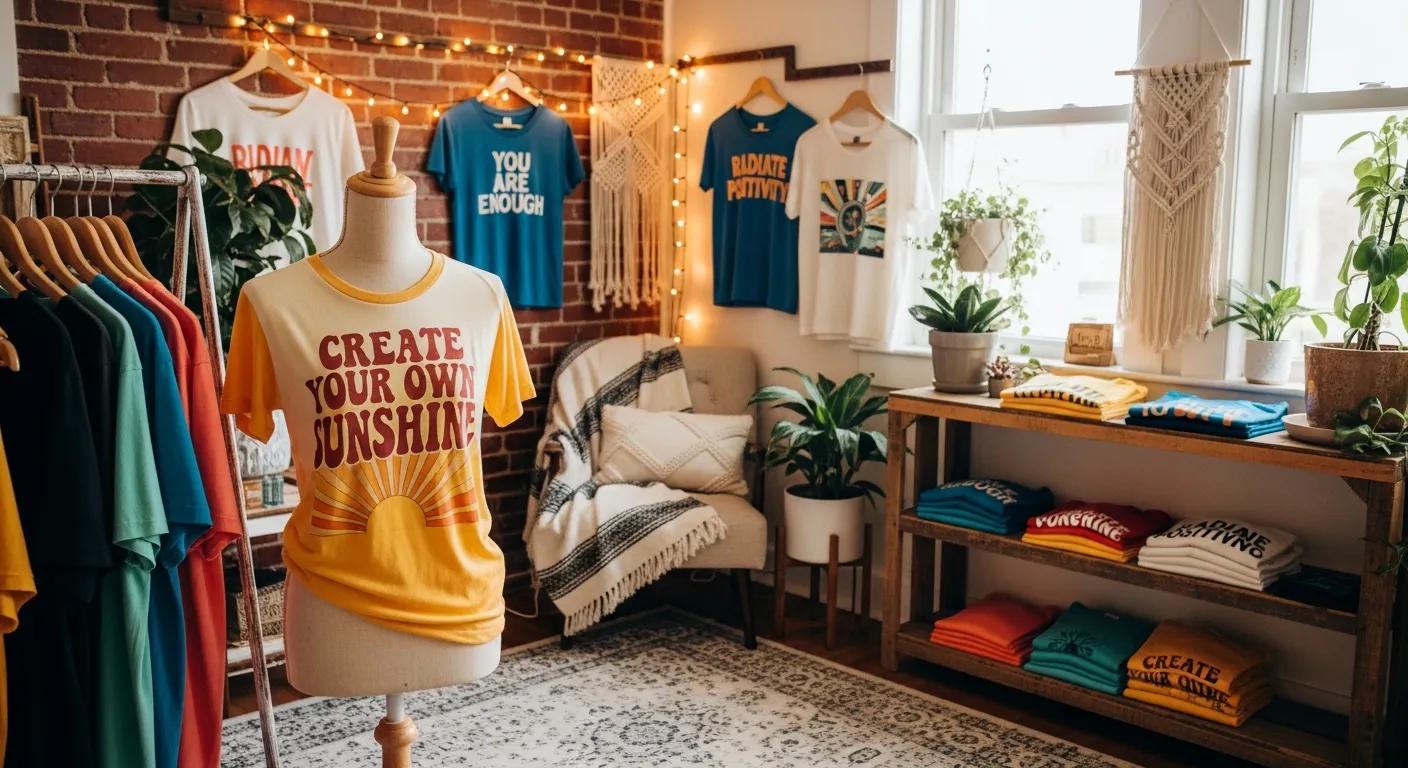
Express Yourself: Building a Unique Wardrobe with Artistic and Affirmation Apparel
Personal style is a narrative you wear—an intentional combination of art, words, silhouette, and color that signals who you are and what matters to you. As fashion experts often highlight, this article shows how to define that narrative, use artistic clothing and affirmation apparel to communicate values, and assemble a wardrobe that boosts confidence and invites conversation. Readers will learn practical discovery exercises, design and styling principles, sustainability considerations tied to print-on-demand fashion, and step-by-step curation techniques for adults and children. The guide balances creative direction with actionable shopping and styling tips so you can move from inspiration to a curated closet that tells your story. Throughout, we weave in examples of artistic and affirmation pieces, explain how wearable art functions as personal messaging, and highlight ethical production choices that support conscious self-expression.
How Can You Define Your Personal Style to Reflect Your Story?
Personal style is the consistent visual language you use to express personality; it works by combining motifs, colors, silhouettes, and messaging so observers infer values and mood. Defining style starts with translating internal preferences—what you value and how you want to be perceived—into outward choices like a color palette, preferred fits, and recurring motifs that form a cohesive signature. A clear personal style reduces decision fatigue while amplifying authenticity, making it easier to shop intentionally and build a wardrobe that aligns with your life roles. Below are quick, practical steps to define a style that reflects your story and prepares you to curate meaningful pieces.
Use this four-step checklist to define your style:
Identify three words that describe how you want to feel when you dress.
Gather ten images that match those words and look for recurring colors and shapes.
Audit your wardrobe to note which items already match those cues and which don’t.
Choose two signature motifs (e.g., bold typography, earth tones) to anchor future purchases.
These focused steps make style discovery manageable and repeatable, and they lead directly into practical tools like style quizzes and wardrobe essentials that help you test and refine your emerging aesthetic.
What Are the Key Elements of Personal Style and Self-Expression?
Personal style comprises discrete elements—color, silhouette, fabric texture, motifs, messaging, and accessories—that together create recognizable expression. Color maps emotion, with palettes signaling warmth, boldness, or calm, while silhouette communicates comfort or formality and anchors how you blend statement pieces with basics. Motifs and typography carry symbolic meaning; a graphic motif or a succinct affirmation on a tee becomes shorthand for beliefs or humor, directly affecting social signaling. Accessories and fit fine-tune the narrative: a cropped jacket alters perceived proportions while a tote bag or enamel pin adds context, and these meronym components—design motif, print placement, fabric—combine to form a coherent visual story.
Understanding these elements helps you make deliberate edits when building outfits, which naturally leads to testing your fashion identity through tools like quizzes and a list of wardrobe essentials that act as anchors for expression.
How to Discover Your Fashion Identity Through Style Quizzes and Wardrobe Essentials?
A short style quiz helps convert subjective taste into actionable shopping criteria by asking focused questions about lifestyle, textures, and statement levels. Sample prompts include: “Which three environments do you dress for most?” and “Do you prefer bold motifs or subtle typography?” Answers map to profiles like minimalist-graphic or eclectic-illustrative and suggest specific staples. Wardrobe essentials that support identity-building include a neutral blazer, a unisex softstyle tee that holds prints well, a versatile hoodie, tailored jeans, a statement sweatshirt with affirmation messaging, and a durable tote bag for layered looks. These anchors allow you to mix wearable art into outfits without losing cohesion.
Using a quiz-derived profile plus a short essentials list makes shopping and editing efficient, which naturally leads into why artistic clothing functions as such a powerful tool for expression.
What Makes Artistic Clothing a Powerful Tool for Self-Expression?
Artistic clothing is wearable storytelling that uses imagery and words to externalize values, mood, and identity; it works by leveraging visual grammar—composition, typography, and iconography—to invite interpretation and dialogue. Cultural researchers often explore how an image or phrase appears on a tee or sweatshirt, signaling affiliation, humor, or conviction more quickly than neutral attire, and that immediacy is what makes wearable art a conversation starter and identity amplifier. Artistic pieces also allow layered expression: a subtle motif on a tote can complement a bold affirmation sweatshirt, creating a nuanced, readable outfit. Below are core benefits that explain why artists and designers increasingly use apparel as a medium for personal narrative.
Artistic clothing offers three core benefits:
Emotional resonance: Graphic motifs and affirmations evoke feelings and act as daily reminders.
Identity signaling: Unique graphics and typography communicate tastes and beliefs without words.
Conversation-starting potential: Distinct designs invite curiosity and social connection.
These benefits explain why people choose wearable art for meaningful self-expression, which leads naturally to how specific garments—like unique graphic tees and print-on-demand options—communicate individuality and fit into a sustainable production model.
Unique graphic tees communicate individuality through deliberate choices in composition, color contrast, typography, and print placement; each design element functions as a semantic token that viewers read. For example, centered bold typography emphasizes a declarative message, while an off-center illustration can signal playful unconventionality; color choices further tune the emotional register, with muted palettes feeling reflective and vivid hues feeling extroverted. Fabric texture and fit also shape perception: a softstyle unisex tee with a relaxed silhouette feels approachable, while a structured sweatshirt reads more intentional. These combined meronym attributes—design motif, print placement, fabric—create a multilayered signal that aligns with a wearer’s identity.
Exploring these design mechanics clarifies why print-on-demand production is attractive for artistic clothing, because POD supports customization and low-volume releases that preserve uniqueness.
Why Choose Print-On-Demand Fashion for Customized Artistic Apparel?
Print-on-demand fashion enables customization by producing garments only when ordered, which supports one-off designs, limited runs, and the freedom to experiment without carrying inventory. This mechanism reduces overproduction and allows artists to test motifs or messaging directly with their audience, matching product variety to personal narratives. POD also facilitates inclusive sizing and multiple product types—t-shirts, hoodies, sweatshirts, tote bags, and kids’ clothing—so expressive designs can reach any demographic without wasteful surplus. In practice, POD’s customization level and made-for-you approach let creators maintain design authenticity while supporting more sustainable purchasing choices.
Having explained POD benefits, we can briefly connect these production advantages to tangible product examples and brand value propositions that help shoppers find reliable artistic and affirmation apparel.
How Does Positive Affirmation Clothing Enhance Confidence and Well-Being?
Affirmation clothing enhances confidence by externalizing supportive messages that reinforce self-concept each time you see them, and it works through repeated exposure to positive wording and social reinforcement. Studies show that clothing choices can subtly shift posture and interaction patterns, which supports mood regulation and self-efficacy. Affirmation apparel also functions socially: it signals values to others and can invite empathy or encouragement, which strengthens social bonds and collective wellbeing. Below are immediate benefits that explain why mindful messaging on clothing is more than decorative—it’s practical psychological apparel.
Evidence-backed benefits of affirmation clothing include:
Mood elevation: Positive phrases act as reminders that refocus attention on strengths.
Confidence support: Repeated exposure reinforces a desirable self-image and posture.
Social signaling: Wearable affirmations create safe openings for supportive dialogue.
These benefits show how affirmation apparel becomes a tool for daily wellbeing, and the next subsection provides practical guidance on choosing authentic affirmations and integrating them into everyday outfits.
What Are the Benefits of Wearing Inspirational and Mindful Fashion?
Inspirational fashion gives both internal and external returns: it acts as a private reminder while broadcasting intention to others, creating a loop of self-affirmation and social feedback. The mechanism is repetition—seeing a phrase repeatedly makes the message more salient and available during decision-making, which supports behavior aligned with that message. Additionally, wearable affirmations can foster micro-communities when others recognize shared values, increasing empathy and social belonging. These emotional and social benefits are particularly useful for people seeking low-effort mental health supports embedded in daily routines.
Recognizing these benefits, many people want practical advice on incorporating affirmation pieces without overwhelming their existing wardrobe, which we address in the styling subsection that follows.
How to Incorporate Affirmation Apparel into Your Everyday Wardrobe?
To make affirmation apparel wearable, pair statement pieces with neutral staples and layer thoughtfully so message and form feel intentional rather than loud. For example, tuck a printed tee into high-waisted jeans and add a neutral blazer for balanced professionalism, or style a sweatshirt with joggers and a denim jacket for casual cohesion; children’s affirmation tees work well under a zip hoodie with simple bottoms. Consider print placement and size: smaller chest prints read subtle and intimate, while large front graphics are bold and declarative; choose the scale that matches your comfort level. Finally, preserve authenticity by selecting messages that genuinely reflect your values, which ensures the clothing reinforces rather than contradicts your personal narrative.
What Are the Steps to Build an Expressive Wardrobe That Tells Your Story?
Building an expressive wardrobe is a methodical process: audit current pieces, identify narrative gaps, select signature statement garments, and plan for versatility through layering and complementary basics. As fashion editors recommend, the mechanism is iterative curation—small, deliberate additions that reinforce your style profile instead of random purchases—so your closet evolves into a coherent story over time. This section provides a numbered roadmap you can follow, plus a comparison table that clarifies which item types best serve specific expressive functions for different demographics.
Follow these numbered steps to curate an expressive wardrobe:
Conduct a wardrobe audit to separate true-signature items from filler pieces.
Define two or three signature motifs or messages that capture your narrative.
Invest in 3–5 statement pieces (tees, hoodies, sweatshirts) that reflect those motifs.
Build a base of neutral staples to support layering and outfit versatility.
Rotate seasonally and edit annually to keep the story coherent and relevant.
These steps create a repeatable workflow for building expression into everyday dressing, and the table below compares common item types to their best uses and styling tips.
Intro to table: This comparison clarifies how specific item types function in an expressive wardrobe by linking each item to recommended uses and concise styling tips that highlight why it expresses identity.
Item Type
Best For
Styling Tip
Unisex Tee
Everyday messaging & layering
Pair with blazer or denim for contrast and use fitted or relaxed cut to tune formality
Hoodie
Casual comfort & bold graphics
Layer under an oversized jacket for street-ready looks and size for intended drape
Sweatshirt
Cozy affirmation statements
Tuck front into high-waisted jeans or skirt to balance silhouette and emphasize message
Kids Tee
Early expression & family matching
Use smaller prints and softer fabrics; match motifs across sizes for family kits
Tote Bag
Functional motif display
Use as an accessory to repeat a theme or color from your outfit for cohesion
This table helps prioritize purchases and shows how each product supports expressive goals; next, we offer demographic-specific curation tips that translate these recommendations into concrete choices.
How to Curate Artistic and Affirmation Pieces for Men, Women, and Children?
Curation differs by demographic primarily in tone, fit, and message scale: adults may prefer subtler typography or abstract motifs for versatility, while children can wear brighter illustrations and playful affirmations that encourage positivity. For men, consider unisex hoodies and tees in relaxed silhouettes that allow bold graphics without appearing fussy; for women, mix fitted basics with oversized statement sweatshirts to play with proportion. For children, choose soft fabrics and clear, age-appropriate affirmations that support emotional vocabulary. Style influencers often highlight how inclusive sizing ensures designs reach more bodies, so prioritize pieces that come in multiple fits and consider unisex options for shared family wardrobes.
These demographic choices inform practical styling templates offered next, which explain how to integrate unique designs into daily outfits for coherent expression.
What Styling Tips Help Integrate Unique Designs into Daily Outfits?
Integrating unique designs relies on balance: pair a statement graphic with three neutral elements to let the artwork or phrase read clearly and avoid visual competition. Layering offers control over emphasis—wear a printed tee beneath a blazer for moderated visibility, or let a sweatshirt be the focal point with monochrome bottoms. Accessorize with complementary textures and small motif echoes, such as a hat or tote that picks up a color from the print, to create cohesion without redundancy. Finally, experiment with proportion and scale by alternating cropped vs. oversized pieces so the visual rhythm of your outfit aligns with your intended expression.
These styling templates make expressive dressing feel achievable, and they connect directly to sustainability choices behind print-on-demand manufacturing discussed in the next section.
How Does Sustainable Print-On-Demand Fashion Support Conscious Self-Expression?
Sustainable print-on-demand (POD) aligns conscious consumption with expressive fashion by producing items only as ordered, which reduces surplus inventory and lowers the environmental impact associated with mass overproduction. The mechanism—on-demand printing and fulfillment—enables artists to offer numerous unique designs without creating unsold stock, and it allows buyers to select precisely the size and style they need, reducing returns and waste. POD also supports small-batch creativity and inclusive sizing, enabling meaningful designs to reach diverse bodies while minimizing ecological footprint. The comparison table below summarizes POD process variations and their sustainability attributes to help you evaluate ethical expressive options.
Intro to table: This EAV-style comparison highlights POD attributes so readers can assess waste impact, customization level, and common materials when choosing expressive apparel produced on demand.
POD Process
Waste Impact
Typical Materials
Made-on-demand printing
Low — items produced per order, reducing overstock
Cotton blends, polyester, recycled fibers
Small-batch artist drops
Minimal — limited runs avoid mass surplus
Organic cotton, ring-spun cotton, tri-blends
Custom print placement
Reduced returns by matching preferences
Heavyweight cottons for long-lasting prints
This table demonstrates that POD models lower overproduction and enable material choices that align with conscious purchasing; the next subsection explains how customization specifically reduces waste and supports ethical fashion practices.
What Are the Environmental Benefits of Print-On-Demand Apparel?
The primary environmental benefit of POD is reduced overproduction because garments are only printed to fulfill existing demand, which cuts down on unsold inventory and the associated disposal or discount-driven waste. Additionally, POD supports targeted production runs that allow designers to experiment with low-volume releases without committing to large factory orders, limiting the carbon footprint associated with large-scale textile manufacturing. When combined with responsible material choices—like blends that withstand repeated wear—POD contributes to longer garment lifecycles and fewer replacements. These mechanisms make POD a practical approach for consumers who want expressive apparel with a smaller environmental burden.
Understanding these benefits points directly to how customization mechanics also reduce returns and support fairer maker economics, which we outline next.
How Does Customization Reduce Waste and Promote Ethical Fashion?
Customization reduces waste by matching products to buyer specifications—size, color, and print placement—resulting in fewer fit-related returns and less surplus stock. It enables more accurate demand forecasting for niche designs and supports artists by allowing them to sell directly without large minimum orders, fostering small-batch economics and fairer revenue distribution. Custom orders can also favor durable fabric choices and construction standards that increase garment longevity, further reducing environmental impact over time. Together, these factors make POD an ethical production model that complements expressive fashion by aligning personal values with purchasing behavior.
For ongoing inspiration and the latest updates on expressive fashion trends and sustainable practices, explore the brand's blog.
From sustainability, readers often want practical places to shop expressive apparel; the following section guides discovery and shows how a specific brand's offerings map to these principles.
Where Can You Find Unique Artistic and Affirmation Apparel to Express Yourself?
When searching for artist-driven apparel, prioritize platforms that showcase original designs, provide clear product descriptions, and offer inclusive sizing and product variety so your chosen motifs can appear on tees, hoodies, sweatshirts, tote bags, and kids’ clothing. Evaluate authenticity by looking for design storytelling, quality imagery, and transparent production notes about print-on-demand processes and materials. For family kits or coordinated gifts, seek unisex options and size ranges that accommodate multiple wearers, and prefer sellers that emphasize made-on-demand production to avoid supporting overproduction. Below are practical browsing tips and a short list of factors to consider while shopping.
Key shopping filters to use while exploring collections:
Filter by product type to compare how a graphic reads on t-shirts versus sweatshirts.
Use sizing filters to confirm inclusive ranges and unisex fit options.
Look for product descriptions that mention print placement and fabric weight.
These steps make it easier to discover trustworthy makers and collections; next we highlight one online brand whose offerings illustrate many of the principles discussed here.
Why Choose Catch Phrase Poet for One-of-a-Kind Expressive Clothing?
Catch Phrase Poet is an online print-on-demand brand offering artistic apparel and accessories across men’s, women’s, and children’s lines, with a product range that includes t-shirts, sweatshirts, hoodies, tote bags, ceramic mugs, and kids' clothes. The brand emphasizes Unique & Inspired Designs and High-Quality POD Products, promoting a Made Just for You approach where items are printed on demand to reduce waste. Catch Phrase Poet positions its pieces as Perfect Gifts and supports Inclusive Sizing and Styles, making it straightforward to find expressive garments that align with your narrative while minimizing environmental impact. Example offerings illustrate pricing and product types, such as the Amplify Peace Unisex Softstyle T-Shirt priced at $27.99 and the Amplify Your Faith Sweatshirt at $39.99, which help shoppers compare value and style quickly.
To understand the philosophy behind these unique designs and the brand's commitment to conscious self-expression, delve into their story.
How to Explore Collections Featuring Men’s, Women’s, and Children’s Apparel?
When browsing collections, start by filtering product categories (t-shirts, hoodies, sweatshirts, kids’ clothes) and then apply size and style filters to isolate unisex options that facilitate family kits or coordinated looks. Use product images to assess print scale and placement, and read fabric and care details to ensure longevity; for gifting, combine adult and kids’ sizes in a shared motif for cohesive sets. Keep an eye out for product types like tote bags and ceramic mugs if you want motif repetition across lifestyle items, and prioritize sellers that clearly state their print-on-demand model and inclusive sizing. These navigation tactics streamline discovery so you can build expressive wardrobes for yourself and loved ones.
With these browsing strategies, you can confidently assemble a wardrobe that tells your story while supporting ethical production and embracing wearable art as a daily practice.
Skip the generic band tee. Here are 12 pieces of apparel for the music lover in your life that go deeper — bold graphics, real messages, and quality that holds up through every show.
Motivational Graphic Tees to Wear What Gives You Drive and Connection
, Catch Phrase Poet
Wearing motivational graphic tees is more than just a fashion statement; it's a declaration of personal empowerment and connection. These unique pieces of urban wear help individuals express their personalities while embedding positive affirmations into their daily lives. By donning apparel that inspires, wearers can enhance their motivation and foster deeper social connections. This article will explore the varied ways motivational tees can uplift the spirit and promote personal expression and community bonding. We will analyze how these tees inspire, what makes Catch Phrase Poet’s designs special, and how to style them effectively to maximize their impact. Additionally, we will highlight the benefits of wearing such urban streetwear and share compelling stories from wearers who have found their drive through these garments.
How Do Motivational Graphic Tees Inspire Drive and Social Connection?
Motivational graphic tees inspire individuals by serving as a medium for self-expression while also promoting social connection. The visual elements, such as their bold designs and catchy phrases, evoke feelings of empowerment and communal belonging. Effective design examples, such as impactful catchphrases, resonate with the wearers and their communities, thereby fostering engagement and conversation. This can lead to encouragement and support systems within shared spaces. Moreover, the psychological impacts on wearers often include increased self-esteem and motivation to pursue personal goals. By wearing these tees, individuals not only motivate themselves but also inspire those around them, creating a ripple effect of positivity and connection.
What Makes Catch Phrase Poet’s Urban Streetwear
Designs Unique?
Catch Phrase Poet stands out in urban streetwear with its distinct approach to apparel that marries aesthetic appeal with motivational messaging. The integration of artistic designs with uplifting catchphrases sets the brand apart, tapping into the desires of consumers for both style and substance. The target audience ranges widely, appealing to individuals looking to express their personalities creatively while promoting positive affirmations. Moreover, the sustainability and quality of materials used in Catch Phrase Poet’s clothing emphasize a commitment to environmental consciousness and longevity, ensuring that every purchase also supports ethical fashion. Explore the full range of unique designs at their collections.
How Do Expressive Apparel Pieces Foster Personal Motivation?
Expressive apparel, particularly motivational graphic tees, plays a critical role in fostering personal motivation. Wearing clothing that features affirmations or motivational slogans can serve as a daily reminder of one’s aspirations and values. This phenomenon is not merely about aesthetics; it embodies the idea of wearable activism through clothing. Individuals often find that these pieces encourage them to stay focused on their goals and inspire others in their community to do the same. The act of wearing motivational apparel becomes a personal commitment to maintaining a positive mindset and actively pursuing self-improvement.
How Can You Style Positive Affirmation Clothing to Spark Connection?
Styling positive affirmation clothing is about more than just throwing on a tee; it involves creating outfits that reflect the messages behind the apparel and encourage connection with others. Here are some tips for styling these motivational wearables:
Choose Impactful Messages: Select tees featuring messages that resonate with your personal values and beliefs. This creates a greater connection when engaging with others.
Layer Thoughtfully: Consider layering motivational tees under jackets or over long-sleeve shirts to create depth and versatility in your look.
Accessorize with Intent: Incorporate accessories such as hats, bags, or jewelry that align with the positive messages of your clothing to enhance the overall impact.
These styling techniques not only elevate personal wardrobe choices but also promote discussions and connections with others who share similar values.
What Are Top Ways to Combine Witty Slogan T Shirts with Everyday Wear?
Combining witty slogan t-shirts with everyday wear can inject personality and creativity into any outfit. Here are several effective ways to incorporate motivational tees into your daily attire:
Smart Casual Ensembles: Pair your motivational tee with tailored trousers or a chic skirt for a polished, yet relaxed look suitable for casual workdays or outings.
Jeans and Sneakers: For a comfortable and classic vibe, wear your tee with your favorite jeans and casual sneakers, making it perfect for weekend activities.
Layered Looks: Utilize a motivational tee as a base layer, adding a light jacket or cardigan on top for added style and versatility.
These combinations not only promote personal expression but also allow wearers to convey their motivations in various settings.
Which Accessories Enhance the Message of Motivational Urban Wear?
Accessories play a vital role in complementing the message conveyed by motivational urban wear. Here are a few accessory ideas that can enhance your outfit:
Motivational Jewelry: Jewelry featuring inspirational quotes or symbols can effortlessly align with the messages of your tee, creating a cohesive and thoughtful look.
Functional Bags: Opt for bags that carry positive affirmations, serving both practicality and style while promoting the same uplifting messages as your clothing.
Statement Hats: Consider hats that echo the spirit of your apparel, whether with graphics or phrases that resonate with your identity and motivations.
By carefully selecting accessories, individuals can further express their commitments to positivity and motivation.
Why Choose Expressive Apparel For Women and Kids to Boost Confidence?
Expressive apparel for women and children serves a purpose that extends beyond style; it fosters confidence and promotes self-acceptance. The psychological impact of positive messaging in clothing is profound, as it encourages both self-expression and body positivity. Styles designed for women's and children's unique preferences help create a sense of belonging in community spaces. By wearing motivational messages, wearers discover their individuality in a supportive environment, fostering social connections that bolster confidence. As children and women engage with this apparel, they cultivate a positive self-image that encourages them to embrace their uniqueness. You can find a dedicated range of apparel for women and children's clothes designed to do just that.
How Does Positive Affirmation Clothing Support Mental Wellness and Style?
Positive affirmation clothing merges mental wellness with style in an impactful way. Wearing messages that promote mental health awareness can serve as a daily reminder for individuals to prioritize their emotional well-being. The psychological benefits of wearing affirmations include enhanced mood and increased resilience during challenging times. Moreover, styling these affirmation pieces can act as a sense of armor against negativity, promoting feelings of strength and positivity. The synergy between mental wellness and fashion highlights how positive clothing can significantly bolster emotional health while allowing individuals to express their personal style.
What Stories Do Customers Share about Wearing Catchphrase Apparel?
Customers frequently share transformative experiences related to their connection with Catch Phrase Poet's apparel. Individuals report that wearing a motivational tee has sparked conversations with strangers, leading to unexpected friendships and community bonds. Many wearers express how the presence of positive messages in their daily outfits serves as a source of inspiration during tough moments, helping them to navigate challenges with a greater sense of purpose. Personal anecdotes highlight the brand's impact on fostering community connections and individual empowerment, illustrating the strength of wearing motivational clothing.
What Are the Benefits of Wearing Urban Streetwear with Motivational Messages?
Wearing urban streetwear adorned with motivational messages provides numerous benefits that enhance personal and social well-being. Some key advantages include:
Enhanced Personal Motivation: Motivational apparel encourages wearers to stay focused on their goals and aspirations.
Fostering Social Connections: Clothing with positive affirmations can serve as conversation starters, promoting connections among individuals with shared values.
Encouraging Self-Expression: These graphic tees allow wearers to express their personalities openly, reinforcing their identities in a public setting.
Acknowledging these benefits underscores the power of urban streetwear to not only make a fashion statement but also to empower and connect individuals on a deeper level. For a wide selection of these empowering pieces, visit all available items.
Building a Capsule Wardrobe with Purpose: Essential Minimalist Streetwear Pieces That Inspire Daily GratitudeCreating a capsule wardrobe is not just about minimalism; it's about intentionality and self-expression. A well-curated collection of streetwear pieces can inspire daily gratitude and reflect personal values. This article will guide you through the essential streetwear items that form a purposeful capsule wardrobe, emphasizing how motivational catchphrases can enhance your style and mindset. Many individuals struggle with cluttered wardrobes and the challenge of expressing their individuality through fashion. By focusing on essential pieces, you can simplify your choices while promoting a positive outlook. We will explore the key streetwear items, the psychological benefits of motivational apparel, and practical steps to build your intentional wardrobe.Indeed, the psychological underpinnings of fashion, particularly streetwear, play a significant role in shaping identity and motivation.
Streetwear Psychology: Identity & Motivationtheories of consumer psychology as documented in figures along with psychological components shaping identity s experiences and motivation in the world of streetwear.Streetwear: What is the Hype about, 2020What Are the Essential Streetwear Pieces for a Purposeful Capsule Wardrobe?A purposeful capsule wardrobe consists of versatile pieces that can be mixed and matched to create various outfits. Essential streetwear items include fitted base layers, oversized outer layers, and graphic tees with motivational messages. These pieces not only provide comfort and style but also serve as a canvas for self-expression.
Essential Piece
Description
Purpose
Fitted Base Layers
These are snug, comfortable tops that can be worn alone or layered.
They provide a solid foundation for any outfit.
Oversized Outer Layers
Jackets or hoodies that offer a relaxed fit.
They add dimension and style while keeping you warm.
Graphic Tees
T-shirts featuring motivational catchphrases.
They inspire positivity and self-expression.
This selection of essential pieces allows for creativity in styling while maintaining a minimalist approach.Which Minimalist Streetwear Essentials Define an Intentional Urban Wardrobe?An intentional urban wardrobe is characterized by key essentials that promote versatility and sustainability. Oversized silhouettes, neutral bottoms, and sustainable materials are fundamental to this style.
Oversized Silhouettes: These pieces provide comfort and a relaxed aesthetic, making them easy to wear for various occasions.
Neutral Bottoms: Tailored trousers or joggers in neutral colors can be paired with almost any top, enhancing the versatility of your wardrobe.
Sustainable Materials: Choosing clothing made from eco-friendly fabrics supports the environment and aligns with the values of conscious consumerism.
By focusing on these essentials, you can create a wardrobe that is both functional and stylish.How Do Motivational Catchphrases Enhance Streetwear Apparel?Motivational catchphrases on streetwear serve as powerful tools for self-expression and community engagement. They allow individuals to communicate their values and beliefs through their clothing choices.
Self-Expression Through Clothing: Wearing graphic tees with meaningful messages can reflect personal philosophies and inspire conversations.
Community Engagement: Apparel featuring shared values fosters a sense of belonging among like-minded individuals.
Marketability of Apparel: Brands that incorporate motivational messages often resonate more with consumers, creating a loyal customer base.
These elements highlight the importance of choosing apparel that not only looks good but also feels good on a deeper level.How Do Motivational Catchphrases Inspire Daily Gratitude Through Fashion?Fashion can be a powerful medium for promoting gratitude and positivity. Motivational catchphrases serve as daily reminders of personal values and aspirations, encouraging self-reflection and mindfulness.Research further supports the profound connection between fashion choices and an individual's overall psychological well-being.
Fashion & Well-Being: Boosting Mood and Self-ConceptThis chapter takes a positive psychology approach to dress and fashion. It presents and discusses existing literature on how people’s conceptualisation of and relationship with fashion influence their well-being across the lifespan. Using an empirical approach, the authors discuss the different ways in which fashion and clothing can boost psychological well-being on different levels, for instance, mood, emotions, happiness, quality of life, creativity, and relationships with others. In addition, they examine how fashion may enable people to develop a positive self-concept and thrive on a psychological level.The Impact of Fashion and Clothing on Well-Being: A Positive Psychology Approach, 2018What Psychological Benefits Do Motivational Streetwear Pieces Provide?Wearing motivational streetwear can lead to several psychological benefits, enhancing overall well-being.
Self-Expression: Clothing that reflects personal beliefs fosters a sense of identity and authenticity.
Increased Confidence: Wearing pieces that resonate with one's values can boost self-esteem and confidence.
Sense of Belonging: Engaging with a community that shares similar values through fashion can create a supportive network.
These psychological benefits illustrate how clothing can influence mental health and personal growth.This perspective is further elaborated by studies exploring the deeper psychological motives and social implications embedded within various fashion trends, including streetwear.
Streetwear & Identity: Psychological Motives in FashionDrawing on interdisciplinary research from marketing, psychology, and evolutionary theory, we interpret various luxury fashion trends by identifying the psychological motives and social implications underlying them. We present these trends under the notion offashion codes:the Conspicuous Code,Wall Street Code,Sugar Baby Code,Streetwear Code,Responsible Code,Outlaw Code, andInconspicuous Code. Each code represents a distinctive set of styles and symbolic meanings that serve specific psychosocial functions, such as signalling wealth, status, competence, attractiveness, morality, or uniqueness. By organising this complex landscape, the chapter sheds light on how luxury fashion enables consumers to navigate social hierarchies, express identity, and fulfil evolving psychosocial needs.The Psychology of Luxury Fashion Consumption, F Morhart, 2026
How Does Expressive Apparel Foster Individuality and Self-Expression?Expressive apparel, particularly those featuring unique designs and motivational messages, plays a crucial role in fostering individuality.
Unique Designs as a Canvas for Identity: Customizable options allow individuals to showcase their personality through fashion.
Customization Options: Many brands offer personalized apparel, enabling consumers to create pieces that truly represent them.
Community Connection: Wearing expressive clothing can spark connections with others who share similar values or aesthetics.
This connection between fashion and identity emphasizes the importance of choosing pieces that resonate personally.How to Build an Intentional Capsule Wardrobe Using Catch Phrase Poet’s Streetwear?Building a capsule wardrobe with purpose involves selecting versatile pieces that align with your values. Catch Phrase Poet offers a range of streetwear that embodies this philosophy, making it easier to curate your collection.What Steps Create a Minimalist Urban Wardrobe with Purpose?To create a minimalist urban wardrobe, consider the following steps:
Master Layering Techniques: Layering allows for versatility in styling, making it easy to adapt outfits for different occasions.
Utilize Graphic Tees: Incorporate motivational graphic tees as statement pieces that can elevate any outfit.
Research Sustainable Brands: Prioritize brands that align with your values, ensuring your wardrobe reflects your commitment to sustainability.
These steps will help you build a wardrobe that is both functional and meaningful.How to Integrate Unisex and Children’s Streetwear Essentials Effectively?Inclusivity in fashion is essential for a truly intentional wardrobe. Here are strategies for integrating unisex and children’s streetwear essentials:
Emphasize Sustainability: Choose pieces that are made from eco-friendly materials, suitable for all ages.
Incorporate Gender-Neutral Styles: Select styles that can be worn by anyone, promoting inclusivity and versatility.
Engage with the Audience: Foster a community around your wardrobe choices, encouraging discussions about style and values.
By focusing on inclusivity, you can create a wardrobe that resonates with a broader audience.What Styling Tips Elevate Expressive Capsule Wardrobes with Motivational Apparel?Styling expressive capsule wardrobes requires creativity and an understanding of how to mix and match pieces effectively.How to Mix and Match Intentional Fashion Pieces for Daily Wear?Mixing and matching intentional fashion pieces can enhance your daily outfits. Here are some tips:
Experiment with Textures: Combine different fabrics to create visually interesting outfits.
Use Statement Pieces: Incorporate bold items, like graphic tees, to serve as focal points in your outfits.
Consider Fit and Comfort: Ensure that your clothing fits well and feels comfortable, as this will enhance your confidence.
These tips will help you create stylish and intentional outfits that reflect your personality.Which Accessories Complement a Minimalist Streetwear Capsule?Accessories play a vital role in elevating a minimalist streetwear capsule. Consider these options:
Statement Jewelry: Bold pieces can add flair to simple outfits, making them stand out.
Unique Footwear: Shoes can define an outfit; choose styles that reflect your personal aesthetic.
Hats and Bags: Functional accessories can enhance your look while providing practicality.
Incorporating these accessories will complete your capsule wardrobe and enhance your overall style.Why Choose Motivational Streetwear Brands for Sustainable and Purposeful Fashion?Choosing motivational streetwear brands aligns with a commitment to sustainability and self-expression. These brands often prioritize ethical practices and meaningful messaging.How Does Catch Phrase Poet Align with Minimalist and Sustainable Fashion Trends?Catch Phrase Poet exemplifies the principles of minimalist and sustainable fashion through its commitment to quality and eco-friendly materials. The brand focuses on creating pieces that are not only stylish but also promote positive messages.
Use of Eco-Friendly Materials: The brand sources sustainable fabrics that reduce environmental impact.
Ethical Production Practices: Catch Phrase Poet ensures fair labor practices in its manufacturing processes.
Artistic Intent in Designs: Each piece is designed with a purpose, encouraging wearers to express their individuality.
This alignment with sustainable practices makes Catch Phrase Poet a compelling choice for conscious consumers.What Role Do Brand Messaging and Catchphrases Play in Consumer Empowerment?Brand messaging and catchphrases are crucial in empowering consumers. They serve as reminders of personal values and aspirations, fostering a sense of community and belonging.
Non-Verbal Communication Through Clothing: Apparel can convey messages that resonate with personal beliefs.
Fostering Community: Wearing brands that share your values can create connections with others.
Enhancing Self-Acceptance: Motivational messages can inspire individuals to embrace their identities and values.
This empowerment through fashion highlights the importance of choosing brands that align with personal beliefs and values.Shop Purposeful StreetwearBuild a wardrobe with purpose using streetwear from Catch Phrase Poet. Discover our urban wear unisex t-shirts and unisex hoodies & sweatshirts that inspire daily gratitude. Browse all products or design custom inspirational streetwear.